
What this looks like in practice. Shown on processes everyone knows.
An order with the wrong item number. A fault report whose answer is spread across three documents. An enquiry with two delivery dates. Using cases like these, we show what AI understands, what rules check and where your team decides.
Where AI takes work off your hands.
Six examples from everyday work in mid-sized companies. Each one shows what the AI takes on and where your team decides.
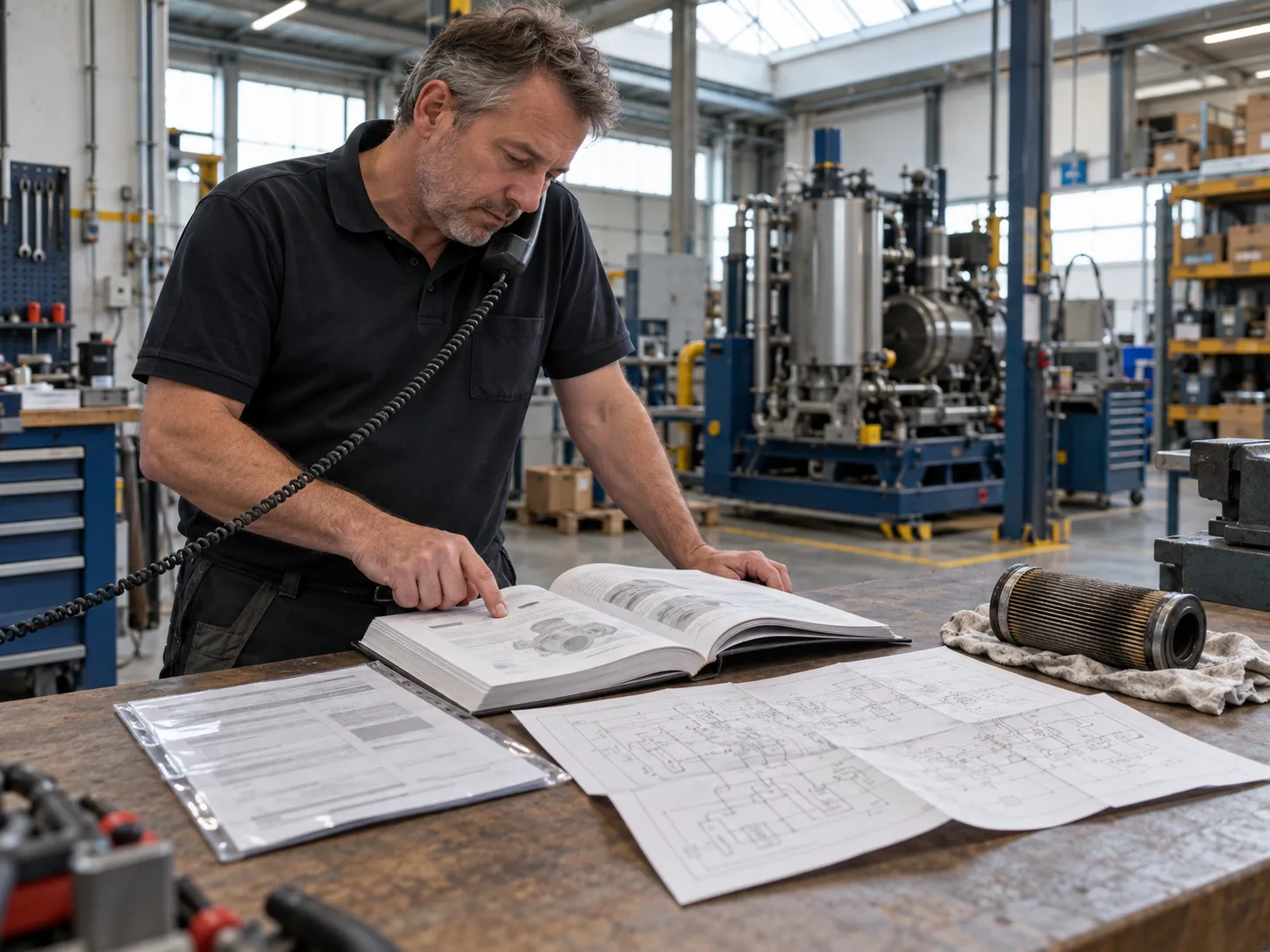
Email enquiries
A fault report. The answer is spread across three documents.
TodaySearch first, then reply.AfterwardsA draft with sources. If knowledge is missing, it says what is missing.If the knowledge is there: AI drafts, a person checksIf not: AI researches and prepares
Sorting documents
Monday morning, the inbox is full of PDFs. Each one looks different.
TodayOpen, rename, file, re-key.AfterwardsFiled without anyone lifting a finger. Posted only after a check.Filing: AI aloneData for the ERP: AI drafts, a person checks
Finding knowledge
What was that file called again? And which folder was it in?
TodaySearching the drive, the mailbox and the archive one after another.AfterwardsOne question. One summary with sources.AI researches and prepares
Preparing quotations
An enquiry with attachments. Somewhere there is a second delivery date.
TodayHow thoroughly an enquiry is read depends on who reads it.AfterwardsEvery enquiry read the way your most experienced people read it.AI drafts, a person checks
Checking complaints
A complaint. Only one colleague knows where to look.
TodayEverything waits for one person.AfterwardsThe check is ready and prepared, for anyone in the team.AI researches and prepares
Order confirmations
The supplier has confirmed. The ERP still shows the requested date.
TodayTyping confirmations into the ERP by hand.AfterwardsThe dates are in the ERP. Purchasing only sees what deviates.AI alone
How much the AI does on its own, we decide step by step.
Before a solution goes live, we measure how accurately the AI handles each step. Then we agree the approval mode with you.
AI alone
The AI completes the step. Your team only sees what is uncertain.
AI drafts, a person checks
The AI prepares. A person checks and approves.
AI researches and prepares
The AI gathers what is needed, with sources. You decide and act.
Don’t automate
Rare, or hardly any manual work. Then no solution pays off, and we tell you so.
No example
Is it worth it for you?
Not every process gets better because AI reads it. Four questions decide whether a solution pays off, including roll-out, operation and the checking that remains. Try it on a process from your day-to-day work.
Quick self-check · think of one process
Initial assessment
You will then see which approval mode suits your process.
The likely approval mode Whether the AI completes a step on its own is only shown by measurement.
- AI drafts, a person checks Frequent, lots of manual work, clear rules, the information is available.
- AI researches and prepares Frequent, but every case needs judgement.
- Don’t automate Rare, or hardly any manual work. Then no solution pays off, and we tell you so.
An initial assessment, not a commitment. We check it properly in the analysis.
How we check this in detail: analysis and recommendationsWhich task takes up most of your team’s time?
Bring a specific task or an initial idea. You do not need a finished project brief.




Your first conversation is directly with one of the founders: Julius, Luis, Max or Quentin.
Prefer to write directly? kontakt@omnerio.com Two or three sentences about your task are enough.